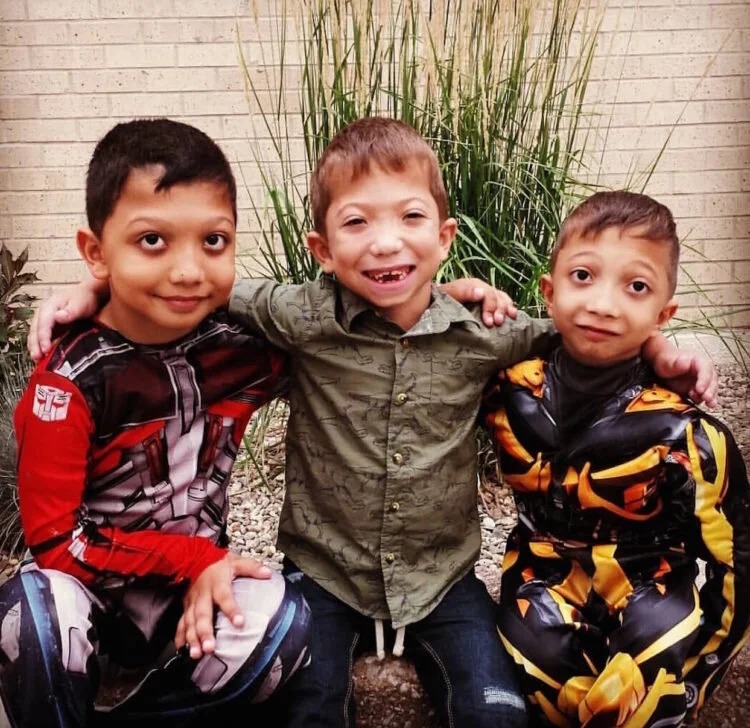



Real families. Real hope.
The Jansen's Foundation advances research and care for Jansen's Metaphyseal Chondrodysplasia.
Our mission is to bring awareness and support research in hopes of delivering a cure to this debilitating skeletal condition.
You are not alone.
Our Impact
- ~30 patients worldwide Identified and connected through clinicians, families, and research networks.
- 11 patients in the United States Actively followed through clinical care and research participation.
- NIH Natural History Study Supporting long-term data collection to better understand disease progression and outcomes.
- Therapeutic development Advancing a targeted PTH inverse agonist toward first-in-human clinical trials.
- Global collaboration Uniting families, clinicians, and researchers around a shared path toward treatment.
The Science
- PTH1R gene mutation Mutations in the PTH1R gene drive constant, unregulated signaling that disrupts normal bone growth and calcium regulation.
- Disease mechanism Overactive signaling leads to skeletal abnormalities characteristic of Jansen's Metaphyseal Chondrodysplasia.
- Inverse agonist therapy Targeted therapies are designed to counteract abnormal receptor activity at its source.
- Clinical outlook Data from the NIH Natural History Study are guiding trial design, with a first-in-human study planned for Spring 2026.
What is Jansen's Metaphyseal Chondrodysplasia (JMC)?
Jansen's metaphyseal chondrodysplasia (JMC) is an extremely rare genetic skeletal disorder that affects bone growth and development.
JMC is typically diagnosed during childhood based on radiographic findings and biochemical abnormalities, though some individuals are not diagnosed until adulthood.
The condition is caused by abnormal regulation of chondrocyte growth and differentiation, leading to progressive changes in the long bones. Over time, this can result in short stature and bowed limbs.
JMC is caused by mutations in the PTH1R gene, which plays a critical role in bone and mineral regulation. At present, there are approximately 30 genetically confirmed cases worldwide, including 11 individuals living in the United States.
Our Story
Faces of JMC
Get Involved
There are several meaningful ways you can support families and help advance awareness and research.